


Diving Facts

- Number of dive shops:
10
- Recommended travel time:
April to November
- Recommended wetsuit
Wetsuit, 3 mm
- Flight connection
Edelweiss recommendation
The Cape Verde archipelago is located off the north-west coast of Africa. The archipelago is made up of 15 islands known for their unspoilt underwater world, where divers have a good chance of encountering manta rays, turtles and nurse sharks. Volcanic activity in the region has created underwater geysers, hot springs and caves, providing unique discoveries for experienced divers. The archipelago is the perfect diving holiday destination, with its pleasantly warm water temperatures and lack of a rainy season. If you’re keen to experience a wide variety of dive sites, why not try island-hopping and visit several of the islands, most of which are connected by domestic flights? However, diving is still in its early stages on some of the ten inhabited islands. Edelweiss flies to the two most popular islands for diving, Sal and Boa Vista – although most diving spots are found off the coast of Sal.
Top diving spots in Cape Verde

A hotspot for underwater photographers on Sal
On the south coast of Sal, the Choclasse diving spot is located about three kilometres from the town of Santa Maria. Here, a wide plateau extends, covered in yellow coral polyps attracting shoals of reef fish. The spot is particularly well-known for encountering tuna as well as Atlantic sailfish. The diving depth is between 13 and 30 metres, while visibility in the clear waters of the Atlantic usually extends up to 30 metres. This makes the spot suitable for both advanced divers and beginners. The interesting topography with volcanic rock formations and coral reefs, and the rich biodiversity, also make Choclasse a popular destination for underwater photographers.

Microcosm at Farol on Sal
Farol, off the coast of Santa Maria, is another easily accessible diving spot that is popular with beginners, with a maximum depth of 12 metres. The diving spot can be reached by boat in just five minutes. Here, a sunken ship creates additional excitement. However, there is not much left of the wreck at Farol. Only a small boiler suggests that there was once an old ship there, but divers still like to come here, as many sea creatures have made their home in the remains. Octopuses, lobsters and swarms of rays and reef fish can all be found in the waters. Depending on the season, a turtle or two may also swim past.

Light spectacle in the “Blue Eye” on Sal
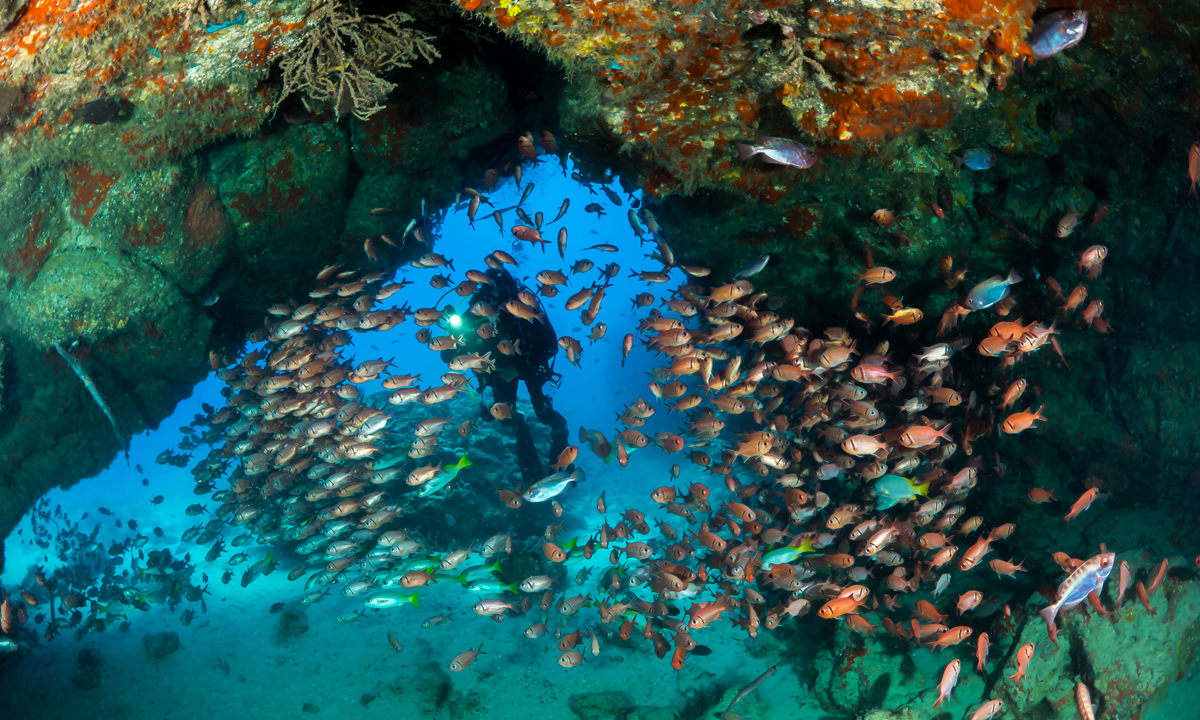
Buracona, the rocky cove on the west coast of Sal, is one of the island’s most popular attractions – for divers and shore-bound visitors alike. Buracona is located near the fishing village of Palmeira and is known for its underwater cave called “Olho Azul”, which translates as “Blue Eye”. Part of the underwater cave has collapsed, so the sun’s rays shine on the water’s surface through the resulting hole, revealing magical blue and turquoise tones. Looking down from the mainland into the cave, the visual effect is reminiscent of the blue iris of an eye. However, the fascinating light effect can also be seen from underwater, with the sunlight being reminiscent of laser beams that cut through the crystal-clear water in the cave. As well as the cave, divers can also explore the surrounding rock formations made from volcanic rock, inhabited by moray eels, octopuses and various reef fish. Dives in the “Blue Eye” go down to depths of up to 36 metres, making this diving spot suitable only for experienced divers.

Cave diving in the Bodega de Tchoko on Boa Vista
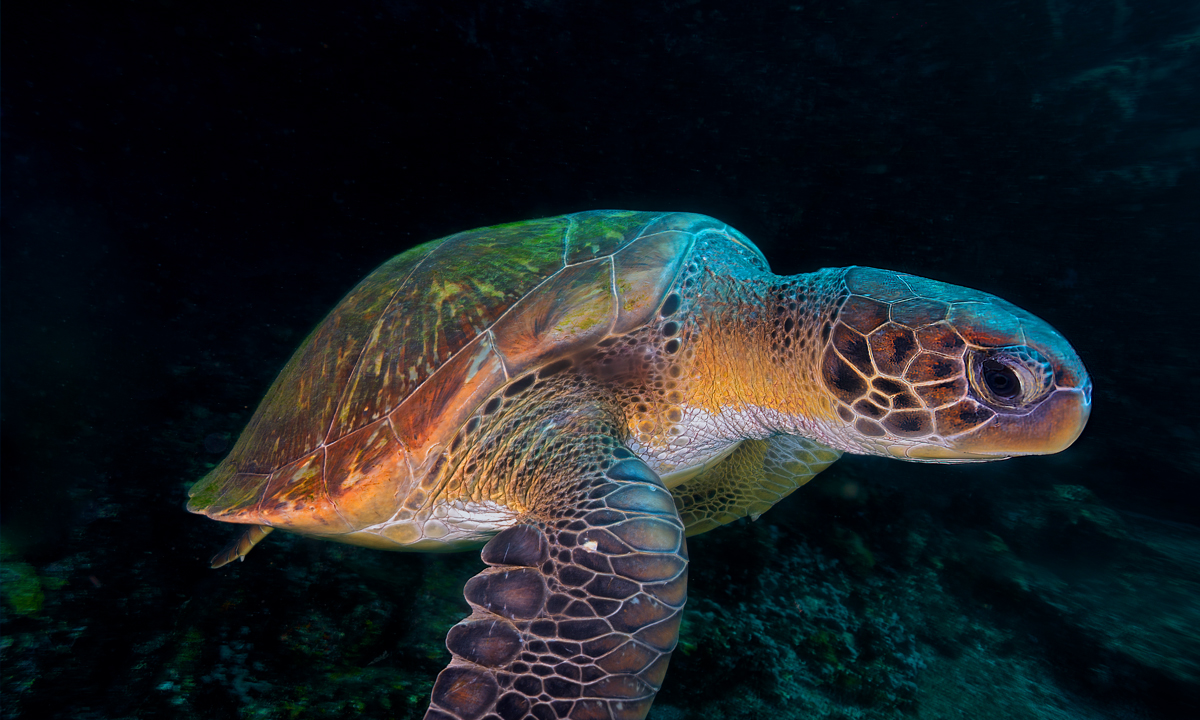
To reach the next diving spot, you have to take a plane or get on board a ferry, as it is located on Boa Vista, the next island to Sal. Boa Vista is known for its endless sandy beaches, barren dune landscapes and whale-watching tours, and here you can see humpback whales from March to May. Boa Vista also has an impressive underwater world. The Bodega de Tchoko, for example, offers a varied playground of adventure for beginner divers. The grotto is about 20 minutes’ drive from Sal Rei, the centre of Boa Vista, and offers plenty of caves and crevices to explore at a maximum depth of 20 metres. Here, you can get your first diving experience among turtles, moray eels and rays.

Diving with nurse sharks on Boa Vista
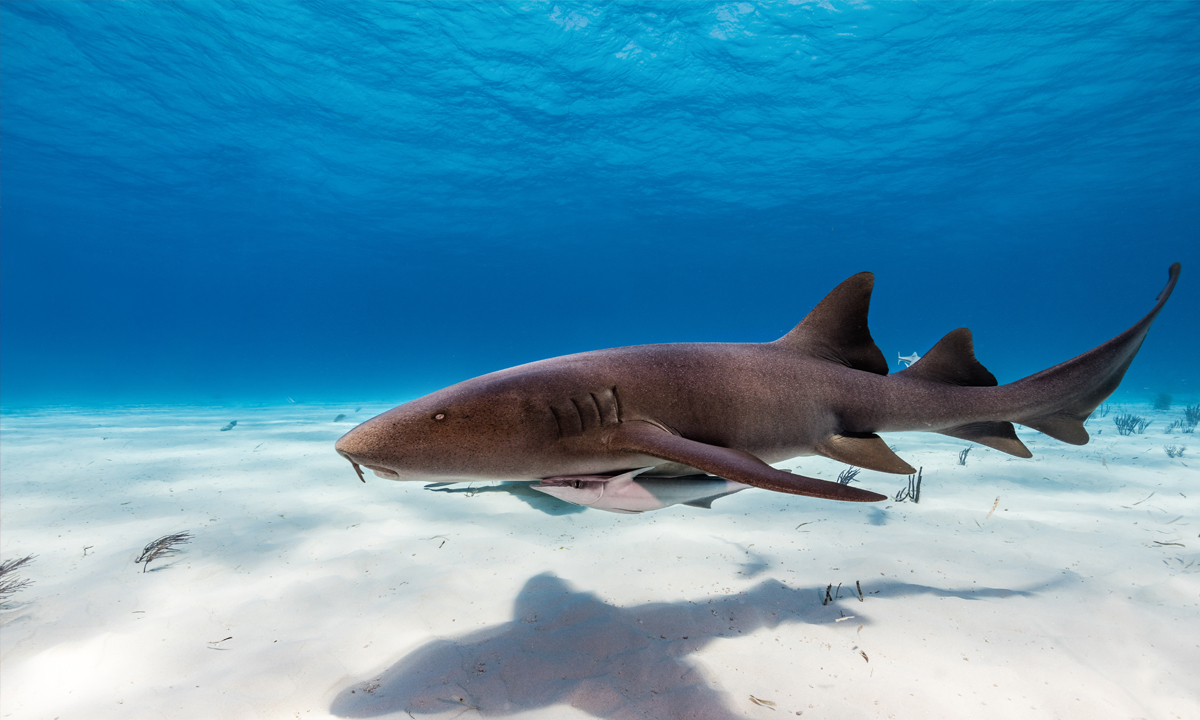
On the island of Boa Vista, you can get up close to a variety of species of shark. At Shark Bow, advanced divers can experience why the diving spot contains the word “shark” in its name. The crevices in the reef are home to sand tiger sharks and nurse sharks, among others. Shark Bow is only 10 minutes by boat from the jetty of the RIU Karamboa Resort. However, the spot is only suitable for experienced divers, as the complex reef with its caves and tunnels is at a depth of 22 metres and extends even deeper. Not only sharks thrive at such depths below sea level; turtles, rays and fireworms also thrive within the rock walls.

Swimming with parrotfish on Santiago
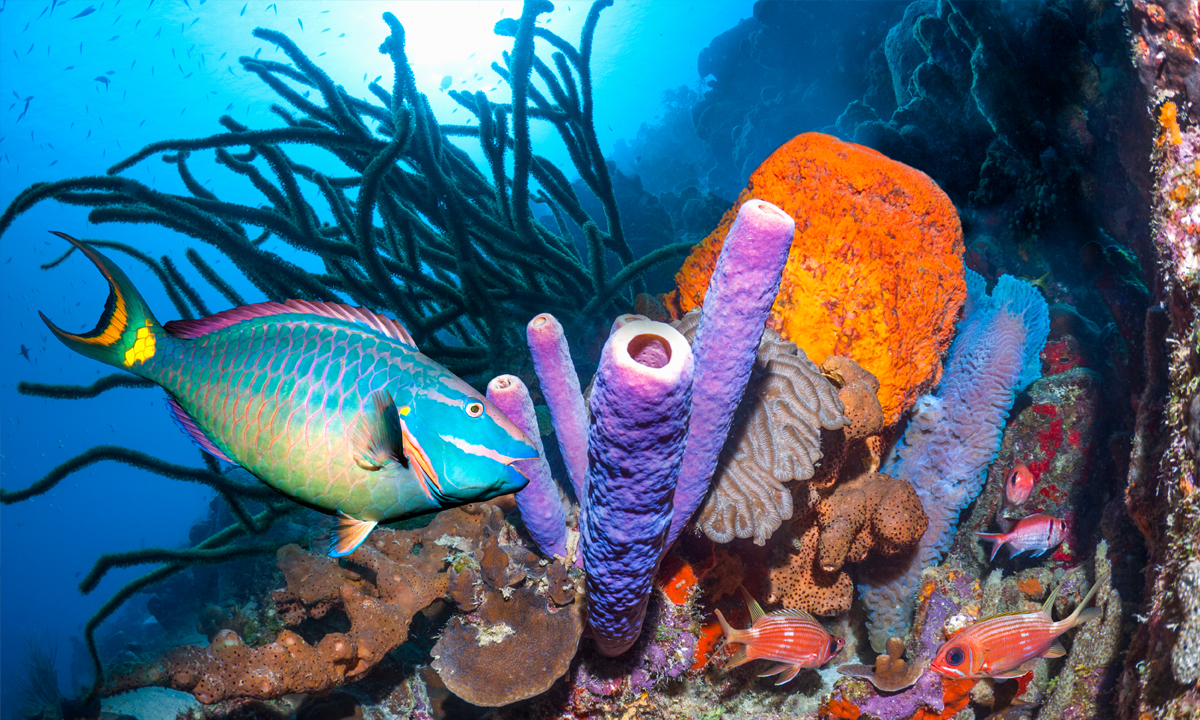
Santiago, the largest, much greener island of Cape Verde, also offers a special diving experience on its north coast in Tarrafal. There are particularly large numbers of blue-and-yellow parrotfish swimming around the “house reef” of this coastal town. Smaller shark species that are harmless to divers are also often seen here. With its sheltered location in the lee of the north-east trade winds and reef depths of 10 to 25 metres, this diving spot is perfectly suited to beginners. In Tarrafal, divers can dive directly from the beach into the underwater world, where many small reef fish say hello. Tarrafal is about a two-hour drive from Praia, the capital of Santiago.
Activity at/in the destination
Recommended diving courses
The following diving schools and courses are the ideal choice for exciting excursions.