




Diving Facts

- Number of dive shops:
12
- Recommended travel time:
October to May
- Recommended diving suit:
Wetsuit, 3 mm
- Flight connection:
Edelweiss recommendation
Alongside its impressive desert landscapes and mystical wadis, Oman also offers a rich underwater world that is ideal for diving and snorkelling. The Sultanate of Oman, located in the south of the Arabian Peninsula on the Gulf of Oman, has gained a name for itself as the ideal starting point for diving safaris. If you are on board a ship for a few days, you will have the chance to discover several of the exciting diving spots in Oman. Some of the popular diving spots, such as the Hallaniyat Islands, are so far off the coast that they can almost only be reached as part of a diving safari. It is worth taking a domestic flight from the capital, Muscat, to the popular seaside resort of Salalah in the south of the Sultanate to discover the full diversity of Oman’s underwater world. Both cities are ideal starting points for diving adventures and are also served by Edelweiss, so they can be reached with open-jaw flights.
Top diving spots in Oman

Daymaniyat Islands: diving in Oman’s only marine reserve
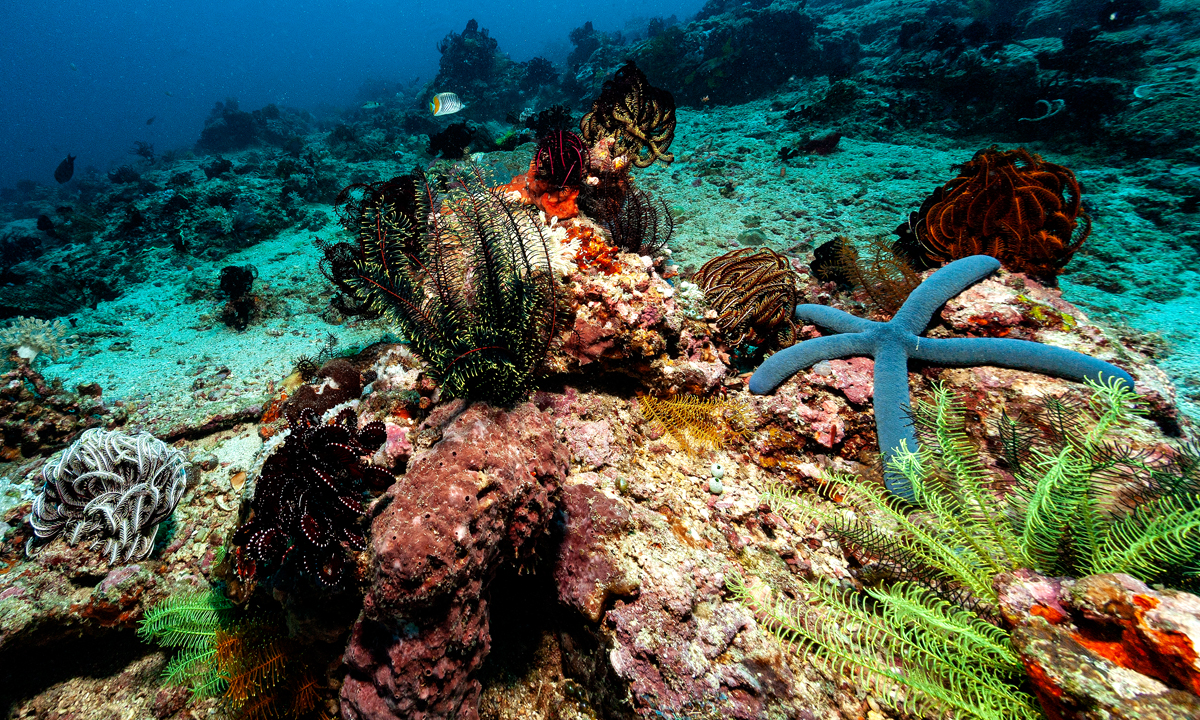
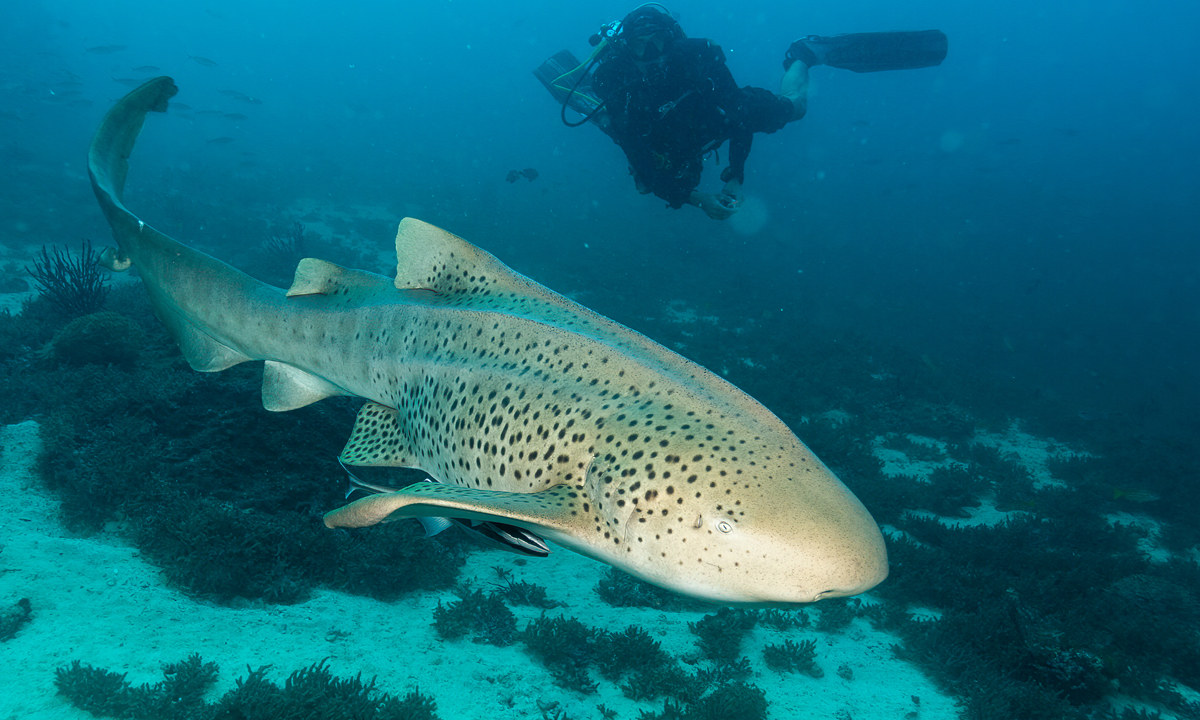
The Daymaniyat Islands are arguably the most beautiful diving area in the Sultanate of Oman. They can be reached by boat from Muscat in about two hours, and offer diving spots for both beginners and experienced divers. The waters surrounding the archipelago of nine uninhabited islands are Oman’s only marine protected area, resulting in a wide biodiversity and almost untouched coral gardens. The high plankton content around the Daymaniyat Islands further increases the density of marine life, but may, depending on the season, also impair visibility. In the diving season from October, visibility is usually between 15 and 25 metres and, depending on the dive site, you can explore the underwater world to a depth of 30 metres. On dives, along with colourful schools of fish, you may encounter whale sharks and leopard sharks. Stingrays and turtles may also cross your path. Dive spot tip: “Three Sisters”. The diving area consists of large boulders covered in soft tree and carpet corals, creating a colourful home for numerous schools of fish. But beware – the Daymaniyat Islands are not accessible to divers from May to October in order to protect the marine environment and biodiversity.

Wreck diving in Bandar Khayran
The 20 or so dive sites of Bandar Khayran are located south-east of Muscat and can be reached by speedboat in about 30 minutes. Bandar Khayran is popular with divers of all levels because of its diversity. Here you can find shallow coral reefs as well as steep walls that extend several metres into the depths. The biodiversity is also impressive with lucky divers encountering green turtles, torpedo rays, honeycomb rays, scorpionfish and even moray eels. In the winter months, with a bit of luck, you can also see dolphins and whales. A highlight in Bandar Khayran is the wreck of the Al Munassir. The massive ship weighs 3,000 tonnes and is 84 metres long. The ship was sunk in 2003 by the Royal Navy of Oman and, ever since, it has provided a habitat as an artificial reef for numerous marine creatures and soft corals. However, since it lies at a depth of around 30 metres, this wreck dive is only suitable for advanced divers.

Dive with sharks at Fahal Island
Fahal Island, also known as “Shark Island”, is just under 25 minutes by boat from the coast of Muscat. It’s called this because blacktip reef sharks in particular feel at home in the waters off the uninhabited island. The underwater world of Fahal Island is also impressive with artistic rock and coral formations, as well as steep walls that descend up to 35 metres into the depths. The island offers diving spots for all levels of experience. Snorkellers also get their money's worth in this diving area, because in good conditions visibility can be up to 30 metres, so you can also observe the colourful underwater world from the water’s surface. Among other things, you can see barracudas and eagle rays, and even whale sharks may cross your path.

At home with the green sea turtles
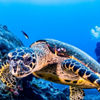
In the Ras Al Jinz Turtle Reserve, there is a very special diving spot called Turtle City. When you dive in the City of Turtles, you may see up to twenty green sea turtles at once. The second-largest sea turtle in the world can be up to 1.5 metres long and weigh around 200 kilograms. The species is threatened with extinction, but divers at the Ras Al Jinz Turtle Reserve regularly marvel at some of these rare sea creatures. Of course, there is much more to see on the reef of Turtle City, and since it has a maximum depth of 16 metres and lies in a protected bay, this diving spot is ideal for beginners. The easiest way to reach the City of Turtles is from Muscat, where boat tours out to the reef are available. You cannot explore Turtle City on your own as it is located in a nature reserve and diving is only permitted here with authorisation, so you need to join a guided tour. The best conditions for seeing green sea turtles are from May to September.

Unexplored depths around the Hallaniyat Islands
In the south-western part of the Sultanate lies the second city that Edelweiss serves in Oman, called Salalah. It also borders the Indian Ocean, making it an ideal starting point for diving trips. If you like to dive in a place where nature is virtually untouched, the somewhat remote Hallaniyat Islands are just right for you. The diving spots in the archipelago can be reached either on a diving safari from Salalah, or by driving for around four hours to the fishing village of Shuwaymiyah, from where day trips out to the islands are available. The fact that the underwater world around the Hallaniyat Islands is particularly well-preserved and rich in marine life makes them extremely popular with diving enthusiasts. Consequently, not only large schools of fish, but also turtles, moray eels, rays and even manta rays can be spotted. The maximum diving depth varies between 15 and 30 metres, making the islands exciting for both beginners and diving professionals alike. With luck you may encounter humpback whales in the winter months between January and April – and if you’re very lucky, you might even spot an orca.

Historic journey into the depths at the Chinese Wreck
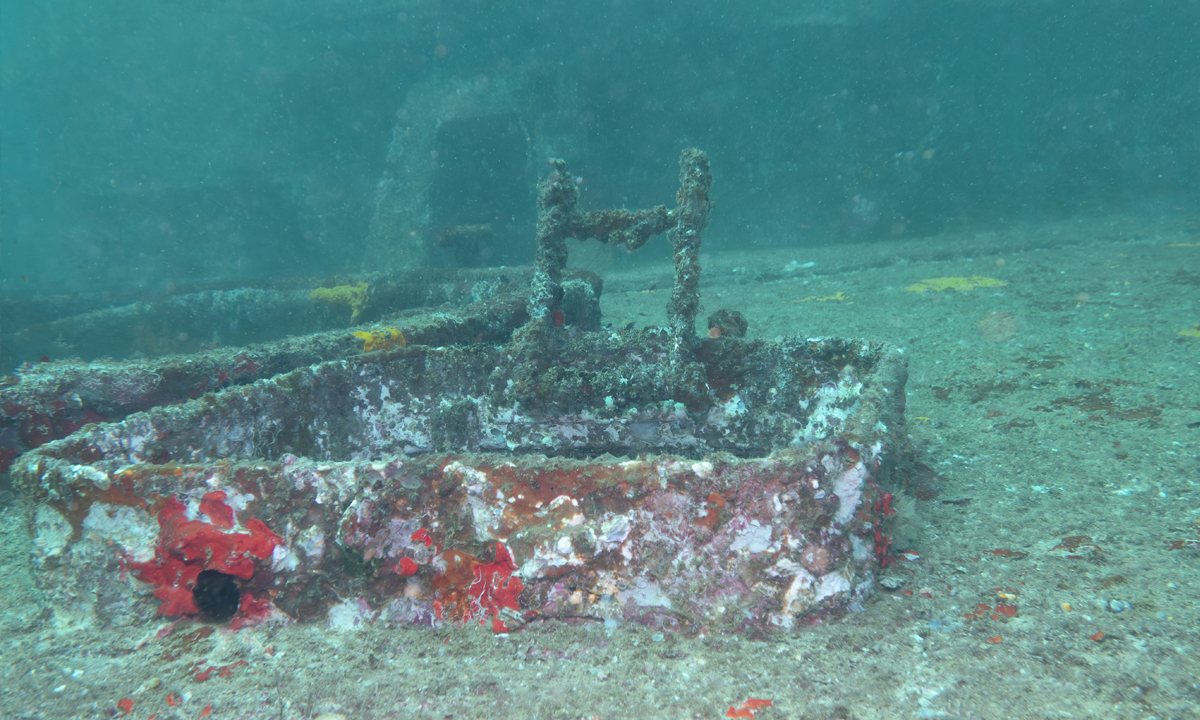
A particularly fascinating diving experience awaits you off the coast of Mirbat, around 45 minutes’ drive from Salalah. The Chinese Wreck is located there, and it has long since become an artificial reef with a wealth of species. Despite its name, the sunken ship is not a Chinese behemoth, but a Portuguese steamship that crashed into the rocks off Mirbat and sank 120 years ago. You don’t have to dive very deep at the Chinese Wreck to get a lesson in history. The wreck is located at a depth of six to twelve metres, so providing the ideal opportunity for beginners to gain their first experience of wreck diving. However, it is not possible to dive inside the wreck. If you dive here, you can not only explore the mysterious remains of the wreck, you can also observe large schools of fish, moray eels and rays.

Dive, snorkel and relax in Eagle Bay
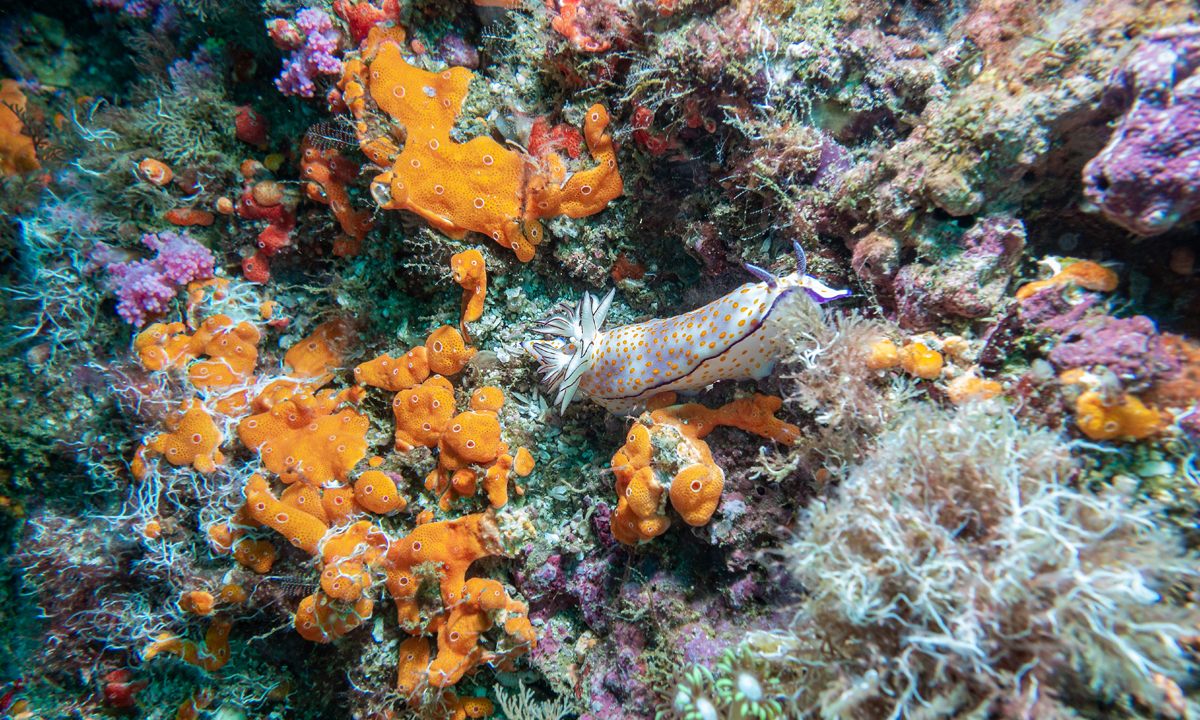
Also located near to Mirbat is the popular diving spot, Eagle Bay. The diving area, located in a sheltered bay and with depths of five to 15 metres, is rather shallow and almost free of currents, making it ideal for diving novices and snorkellers alike. The coral gardens are filled with reef fish such as clownfish, triggerfish and scorpionfish, but octopuses, moray eels, nudibranchs and curious turtles also swim through the waters of Eagle Bay. As well as being a great diving spot, the bay also boasts a lovely sandy beach where you can relax after a dive or a snorkelling adventure.
Activity at/in the destination

Recommended diving courses
The following diving schools and courses are the ideal choice for exciting excursions.